When the Newspaper Didn’t Come
Modern life trains us to think with purpose, but in doing so, we lose the natural joy of purposeless observation.
One morning last week, I woke up to find no newspaper by the front gate. I waited for the newspaper boy for a while, and then it struck me that the previous day had been Ganesh Chaturthi, a holiday for the newspaper.
After my morning jog at the usual spot, with nothing to read, I just sat on my bike and quietly looked around. My eyes caught a young boy spraying the tender brinjal saplings. “From where I sat, it wasn’t clear whether the boy had a mask on as he sprayed. My first thought was about what the chemical fertilizer might do to his health. Not long ago, I wrote a press release for a hospital about a particular form of chronic kidney disease - it was referred to as CKDu, with the ‘u’ standing for unknown origin. Since most CKDu cases occur in farming households, many believe harmful chemical exposure could be the cause. My thoughts then drifted to the declining soil health, and then to the plight of consumers like myself.
After a while, a large herd of milch buffaloes passed by. I couldn’t help but think of the cruelty they endure—treated by people as nothing more than milking machines. We have reduced their lives to a cycle—pregnancy, calving, lactation, and milk. The cycle repeats until, one day, they are sold to a butcher.
Soon, I noticed water entering a small, makeshift channel that connected two nearby farms—flowing from the one with a well to the one without any water source. But the water had to travel across a long stretch of land separating the two farms. I found myself thinking, ‘What a waste of such a precious resource,’ while watching how much water the land would soak up.
Finally, my gaze shifted to my own thoughts. It was clear that I was thinking about everything. But would things have been any different if I had been reading the newspaper that day, as I usually do? Of course, my mind would still have been busy—generating thoughts shaped by the cues and boundaries laid down by the writers of the news. That is the very function of the media. And now, as if this were not enough, we are beginning to enter the world of augmented reality. When we wear a smart glass—wouldn’t it actually be augmenting overthinking in reality? I don’t know; I haven’t worn one yet.
All I know is that there is another way to spend time—just observing, without being swept away by thought. The boy moving carefully across the farm, head bowed, intent on leaving no sapling untouched; the buffaloes ambling slowly, brushing against one another, heads raised as though lowering them would rob them of breath; and the joyful rush of water, freshly released from the farm, its bubbling sound like the giggles of children spilling out of school.
Purposeless observation is among the purest, most unadulterated forms of relaxation and entertainment—especially for the modern man, helplessly addicted to thinking.
As children we lived that way before school, which was perhaps where we were first compelled into structured thinking. We adopt this method early, and eventually, it seeps into everything. We apply it everywhere: in production, in learning, in killing time, and even in dominating social spaces. And we lose our natural ability to get lost in purposeless observation.
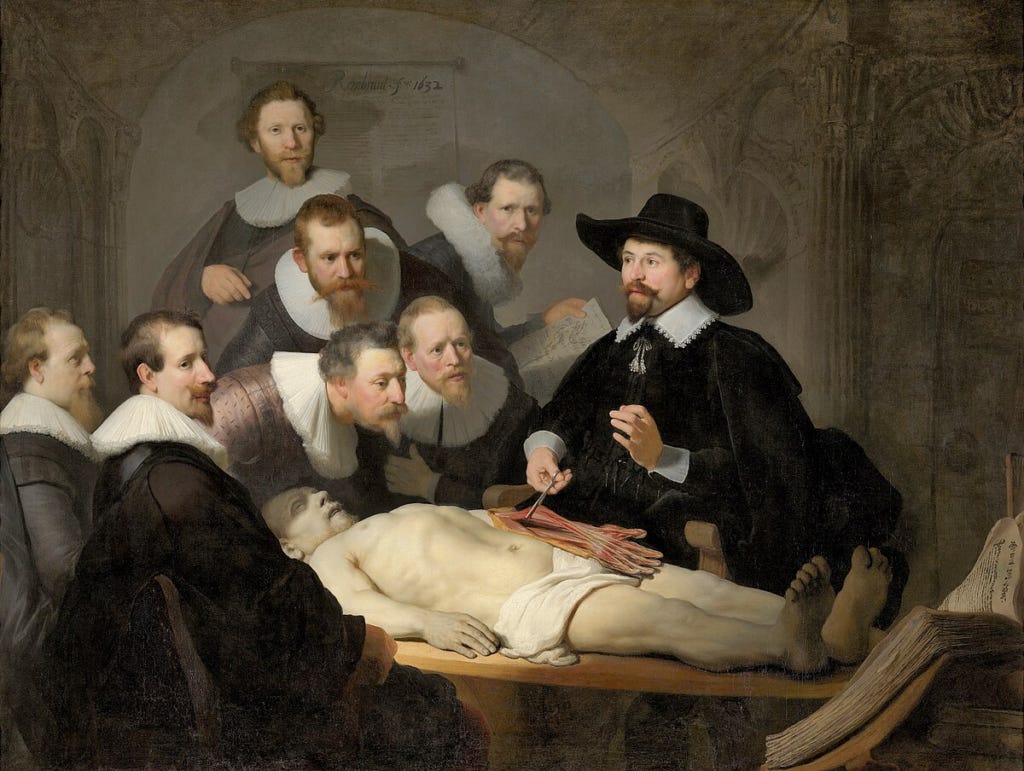
Maybe, we need some training in purposeless observation of the world around us. Some films can do this training for us. Some art forms can do it. I recollect what David Brooks, a New York Times columnist, in one of his pieces (“Who will teach us how to feel?”), points out: “what art has traditionally done is educate the emotions”. He writes, “When we see the depth of psychological expression in a Rembrandt portrait, or experience the intimacy of a mother and daughter in a Mary Cassatt, we’re not gaining a new fact, but we’re experiencing a new emotion.” I’m not sure about this idea of ‘educating emotions’. What matters is that observation needs no utility value at all—the last thing on a child’s mind while looking at the world around.
Cheers!
Sankar. G
Rajapalayam
www.sankarg.com
Hi Arati, hope all's well. To answer your question, we have no control over our thoughts. We can never gain any control no matter what we do. Wandering into thoughts is perfectly alright. It happens to me all the time. I bring myself back to the present moment as you do. Mindfulness is great. Mindlessness is equally great.
Good essay! But SankarG - what control do we have on our thoughts, controlled or otherwise. Many times I find myself wandering in thoughts, need to be brought back into the present moment. Thanks again